How do you make Mario and his friends feel like they actually live in the park?
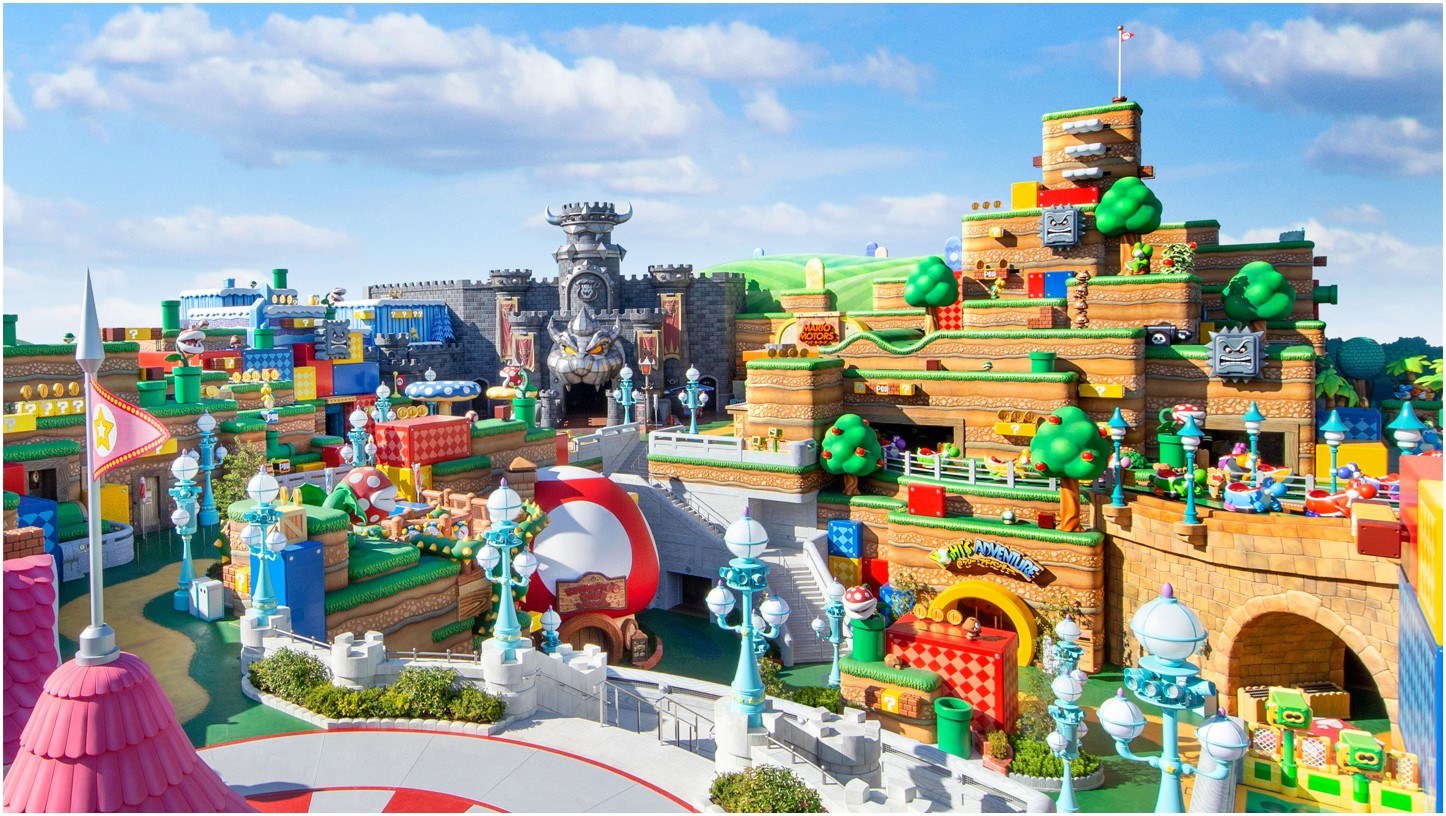
Universal Studios and Nintendo set out to build one of the most ambitious themed lands ever attempted, a place where the physical world and the Nintendo universe become indistinguishable. Future Colossal was brought in during the park’s design phase to shape its interactive experiences, and to prove the ideas worked before they were built. We stayed on through development and deployment across three parks.
Universal Studios
BrandNintendo
Design, Engineering, Software Development, Custom Hardware, Rapid Prototyping, Production, Installation
Super Nintendo World is built on a simple promise: the characters are real, and the park is their world. Future Colossal helped make that promise land. We collaborated closely with Universal and Nintendo from the earliest design stages, leading the rapid prototyping of every interactive element so that each experience was tested, refined, and proven before it was built. That involvement let us influence both the creative direction and the technical execution of the park’s interactives.
From that work, we designed, developed, and deployed four of the park’s experiences across Japan, Hollywood, and Orlando: the AR Binoculars, the Bob-omb Kaboom Room, the Power-Up Wall, and Thwomp Switch Scramble.


Working alongside Universal Creative and Nintendo, Future Colossal led the rapid prototyping of every interactive in Super Nintendo World. Over a little more than a year, we took ideas from paper sketches to working prototypes, including the RFID hardware behind guests’ Power-Up Bands and the original version of the park’s boss battle, so each could be tested and refined before anything was built. Small changes turned around in hours.
From that work, we went on to develop and deploy four of the park’s experiences across Japan, Hollywood, and Orlando, choosing the hardware and building the software for each one.


Guests step up to a fixed lookout modeled on Mario’s binoculars from classic Nintendo games. Through the viewport, the park comes alive with animated characters, secret moments, and effects laid over the real view, from a character peering around a distant building to flying ships and chases.
Innovation: Future Colossal designed, engineered, and programmed this custom mixed reality viewer from the ground up. Hardware in each unit streams live video and sensor data to a server that keeps the animation locked to the guest’s view, while detailed 3D models of the park let characters pass behind real buildings. The four-year project resulted in multiple successful patents.
Highlights:
- 19 custom units built, 14 running daily across three parks
- Characters that move behind real buildings and scenery
- Key collection and hidden easter egg gameplay
- RFID and mobile app integration
- A version of the game unique to Hollywood


Players race the explosive countdown of a giant Bob-omb. The first blast scatters pieces of a prize key around the room. Players find and touch the shards to return them to the center. If they rebuild the key before the Bob-omb blows again, they win.
Innovation: The key shards land on touch displays concealed within the scenic design, so the game plays out across the room itself. As the prototype grew from tablets into a single unified system, we moved it to the TUIO touch protocol, because Windows handles multiple touchscreens poorly on its own. That kept every display responsive at the same time. Future Colossal chose the hardware and developed the software.
Highlights:
- Timed puzzle played against a giant Bob-omb’s countdown
- Touch displays hidden in the scenic, running on the TUIO touch protocol
- Prototyped from paper to tablets to a unified system
- Running in Japan and Orlando


The park is filled with question blocks that guests punch to collect coins. Future Colossal was asked to make this one extra special. Players punch the block to produce power-ups, collect them, and trigger a minigame and a Mario-themed dance party moment.
Innovation: A high-density LED panel turns one wall of the space into a portal to the world of Super Mario, built to blend with the scenic walls around it. LiDAR sensors hidden in the scenic detect every punch. We tested three to four LiDAR models before choosing the one that went into production. Every coin the wall generates counts toward the park’s leaderboards.
Highlights:
- Punch-activated question block
- High-density LED wall designed to blend into the surrounding scenic
- LiDAR sensing concealed in the scenic, chosen after testing several models
- Collectible power-ups, a minigame, and a dance party moment
- Every coin counts toward the park’s leaderboards
- Running in all three parks


In Super Mario 3D World, whole levels are built from Switch Panels that change color when Mario steps on them. Thwomp Switch Scramble brings that mechanic to a large digital wall, where players race to switch every panel to the same color in an environment of crashing Thwomps.
Innovation: The game reaches past the screen. LiDAR sensors hidden in the scenic track every touch on the wall. Each crash of a giant Thwomp block blasts players with air and sound and flips tiles, undoing their progress. The game adapts to each park: Japan’s version runs on a high-density LED wall, and Hollywood and Orlando run on projection.
Highlights:
- Large digital wall built on Super Mario 3D World’s Switch Panel mechanic
- LiDAR sensing concealed in the scenic
- Thwomp crashes felt through air and sound
- Tiles flip with every crash, raising the stakes
- Running in all three parks, on LED in Japan and projection in Hollywood and Orlando


Future Colossal’s work on Super Nintendo World began with prototyping every interactive in the park, before anything was built, and it still runs in all three parks today. Nintendo reviewed every character detail throughout development. Its team had seen the Power-Up Wall game hundreds of times by then, yet when the wall was installed, they were struck by how seamlessly the digital wall blended into the scenic around it. Our AR Binoculars have run daily since the park opened in Japan in 2021, and the four-year effort behind them resulted in multiple successful patents. The LiDAR expertise and hardware lessons from this project carry into Future Colossal’s work today.

